
Magazine
MAGAZIN
Welcome to the Ecotope
#greenbuilding

Welcome to the Ecotope

The master plan named Ecotope was chosen by renowned Swiss education and research institute EPFL to fulfil an important requirement. Green spaces will flourish instead of blanketing the ground with bleak tarmac; circular materials will replace concrete and steel.

The Ecole Polytechnique Fédérale de Lausanne (EPFL) is one of the most prestigious universities in the world. Since the 1970s on the northern banks of Lake Geneva, it joined forces with Lausanne University to create Switzerland’s largest education and research centre. Although in recent decades several new buildings were added – such as the Rolex Learning Center by SANAA and the SwissTech Convention Center by Richter Dahl Rocha & Associés, these lacked an overall plan and the architectural vista is therefore rather patchworked. Large gaps between buildings are typically landscaped, yet here the site is dominated by barren, sealed ground. There is a distinct lack of pleasant areas with lush greenery, and it offers little appeal. This is a shortcoming that is expected to be resolved by the new master plan Ecotope, which was designed by architects 3XN and Itten+Brechbühl AG.
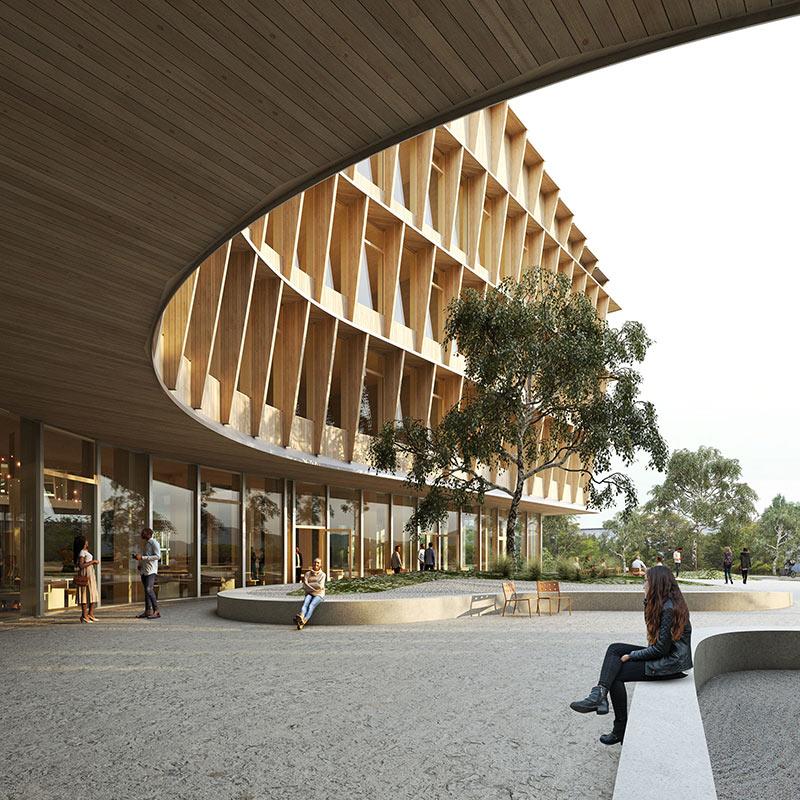
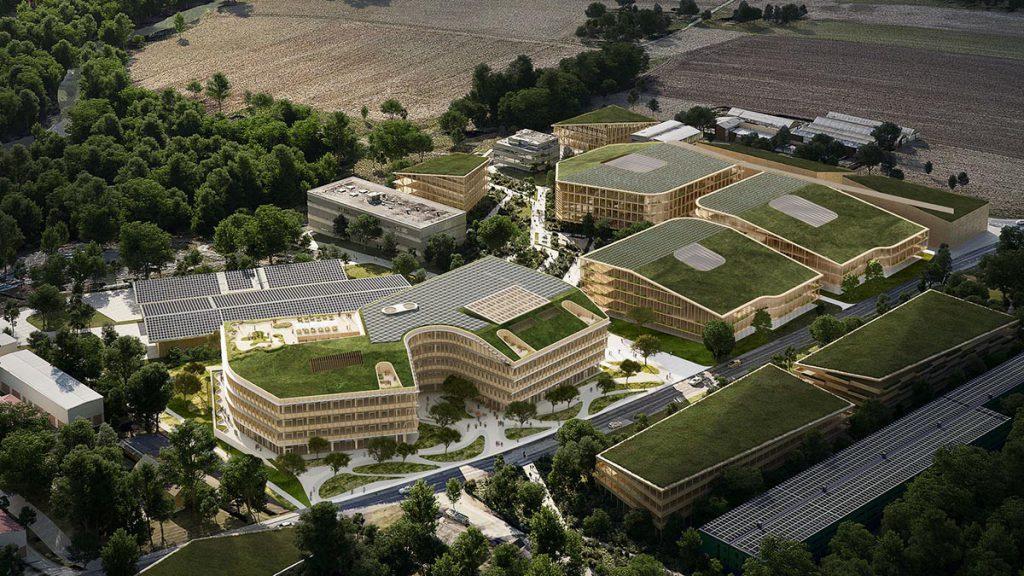
Ecotope Campus, timber construction, master plan, 3XN, EPFL, Lausanne, Switzerland
The master plan by Danish architects 3XN focuses on timber construction and biophilic design principles.

Focus on biophilic principles

All considerations concentrated on expanding the existing EPFL Innovation Park and its forthcoming makeover to mark the site’s 30th anniversary in 2022. Over recent decades, architecture has echoed the transformation experienced by technology and has undergone radical change.

Nowadays, progressive thinking is reflected to a lesser extent by imposing designs, and no longer by energy efficiency alone. Instead, the focus is on a wide range of architectural soft skills that are geared towards user benefits and the environment. As a result, green spaces and the use of biophilic principles are a high priority for Ecotope, as explained in the project description.

Ecotope will be a campus that facilitates and generates disruptive innovative solutions by being the interface between EPFL and society at large.

Jan Ammundsen, head of design and senior partner at 3XN

“Ecotope will be a campus that facilitates and generates disruptive innovative solutions by being the interface between EPFL and society at large,” remarks Jan Ammundsen, head of design and senior partner at 3XN. The result is a master plan that achieves an efficient use of space, adapts to the local climate, and breathes life into the whole site. “A green and social spine runs through the entire site and through the site’s main building, making it a strong design element with space for social encounters as well as for plants, birds and bees.”
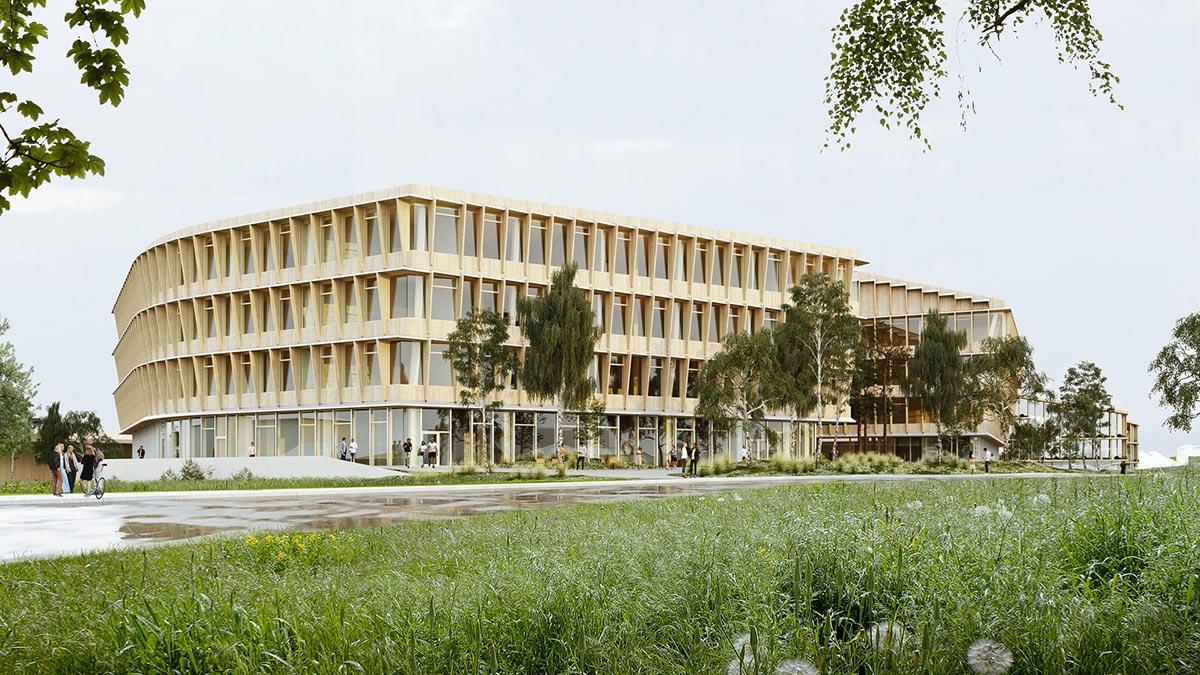
Ecotope Campus, timber construction, master plan, 3XN, EPFL, Lausanne, Switzerland
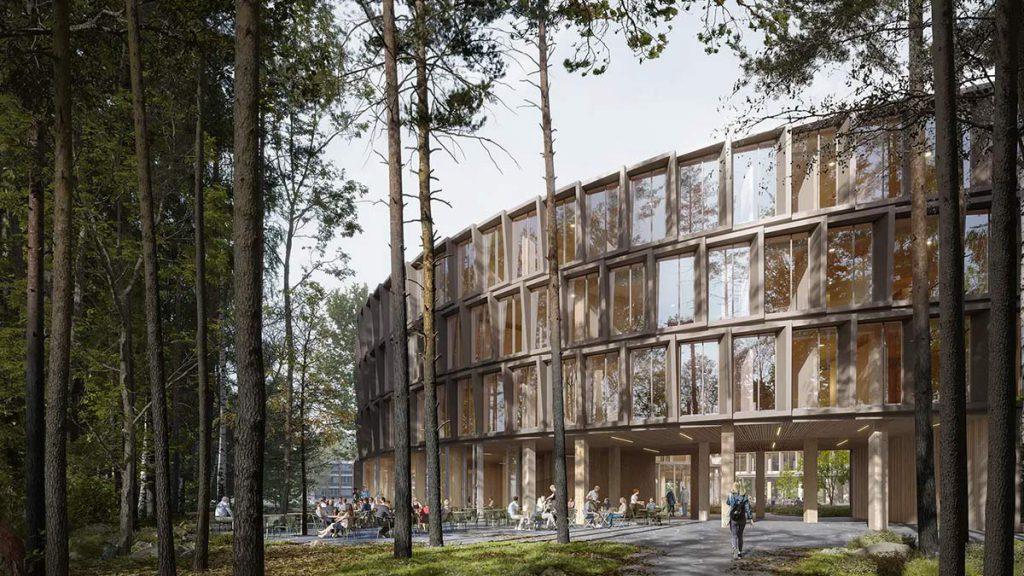
The new main building is situated on a green pedestrian route that stimulates interaction.
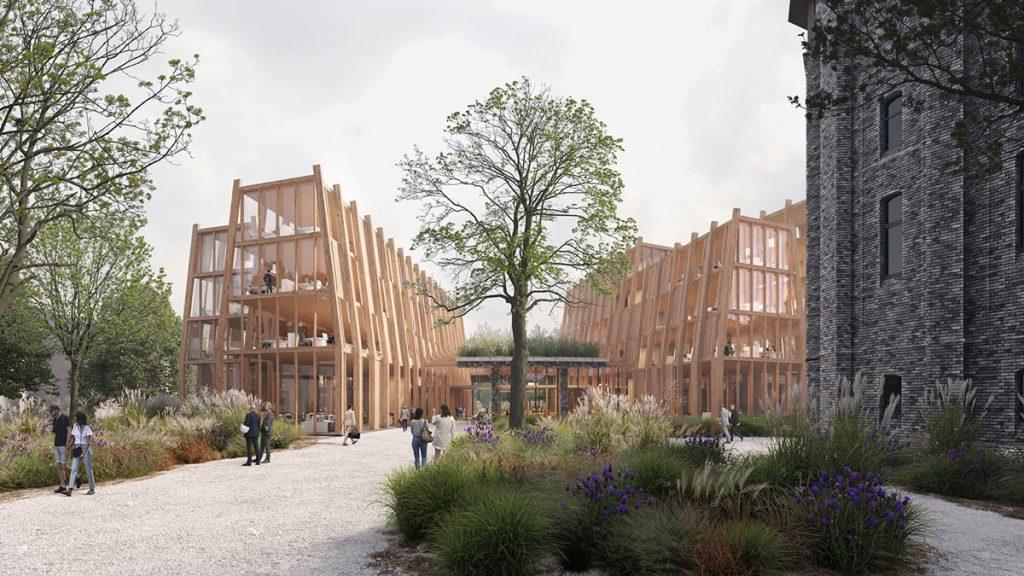
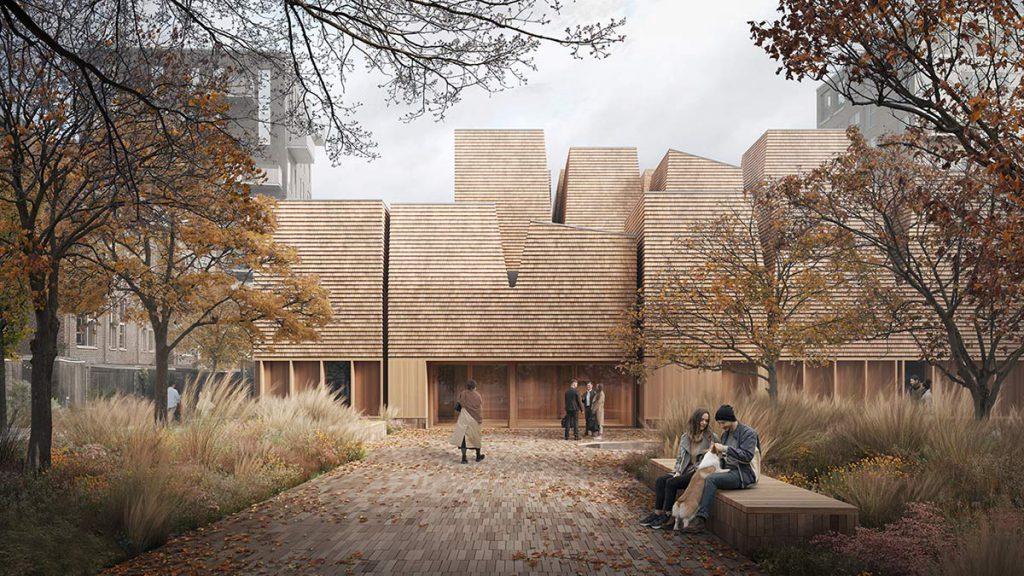
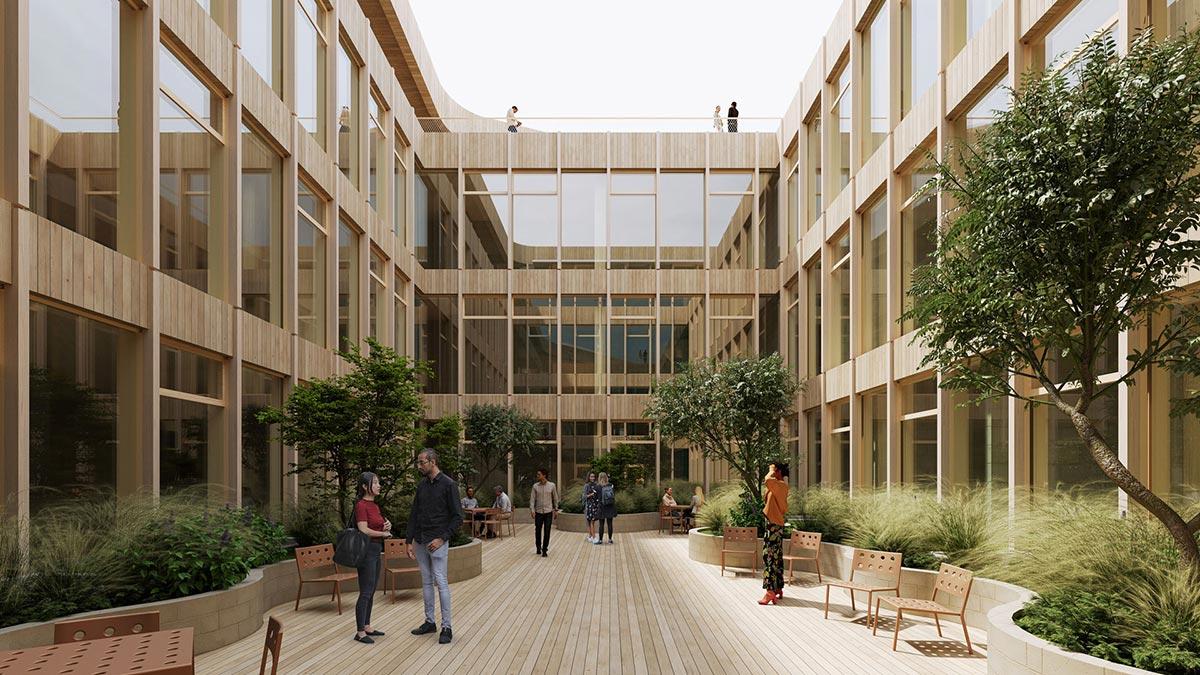
Courtyard, Ecotope Campus, timber construction, master plan, 3XN, EPFL, Lausanne, Switzerland
Areas of lush greenery where people can meet up are found all over the campus and provide a good quality of life.

Coincidence as an initiator

As 3XN founder Kim Herforth Nielsen explained in an interview with ubm magazine., the studio follows the principles of behavioural design. In other words, the manner in which space is designed has a direct influence on the people who use this space. The project description reads: “With the foundational aim of the Ecotope to bring different communities together, the main building is designed around the idea of serendipity.”

The layout of the building seeks to foster interaction through unplanned encounters.

3XN, architects

The term serendipity is defined as the chance observation of something that was originally not pursued, when this turns out to be a surprising discovery. Coincidence becomes the initiator of new ideas, and the architecture here is therefore intended to promote and cultivate such coincidence. “The layout of the building seeks to nudge the user groups to both meet each other formally and informally, fostering interaction through unplanned encounters.”
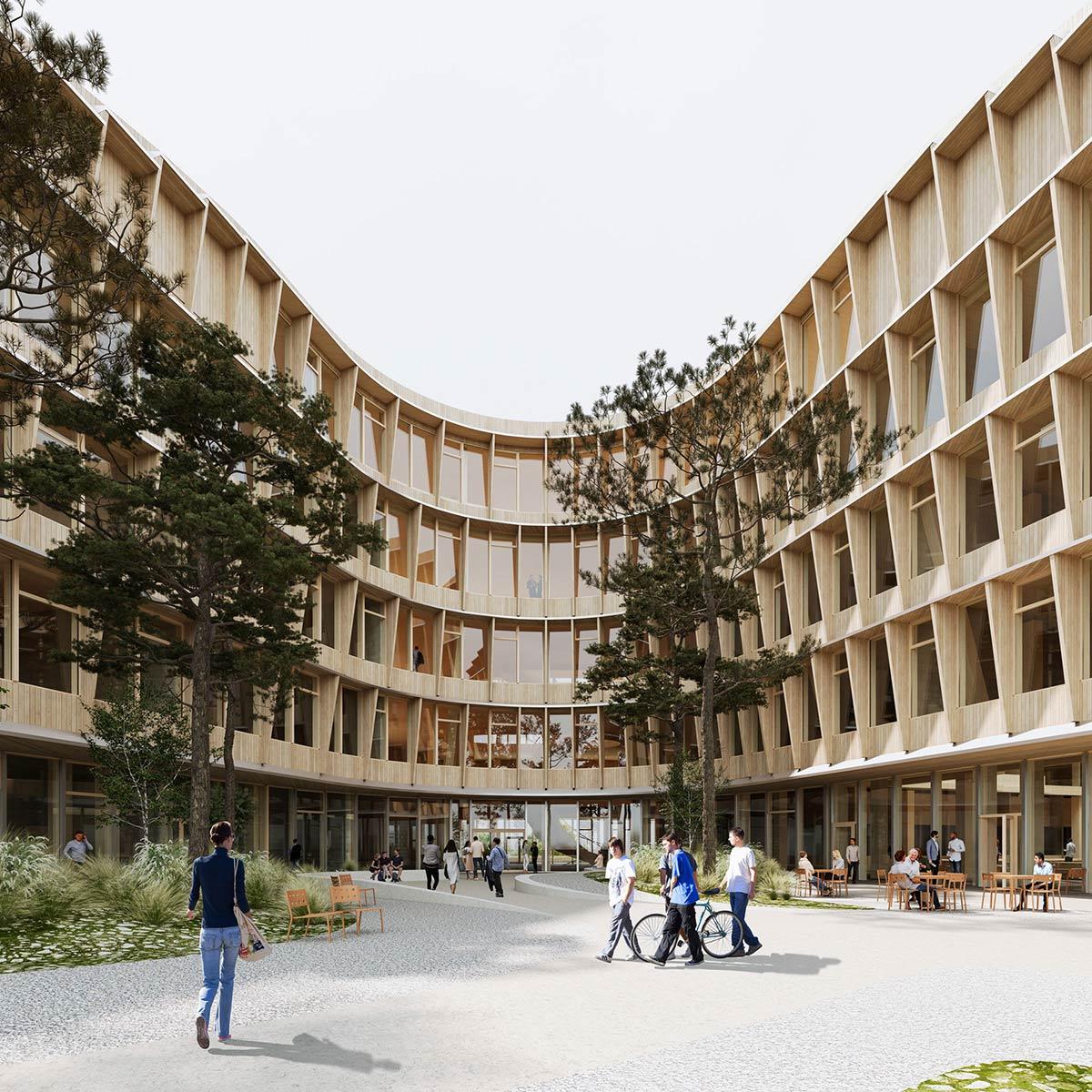
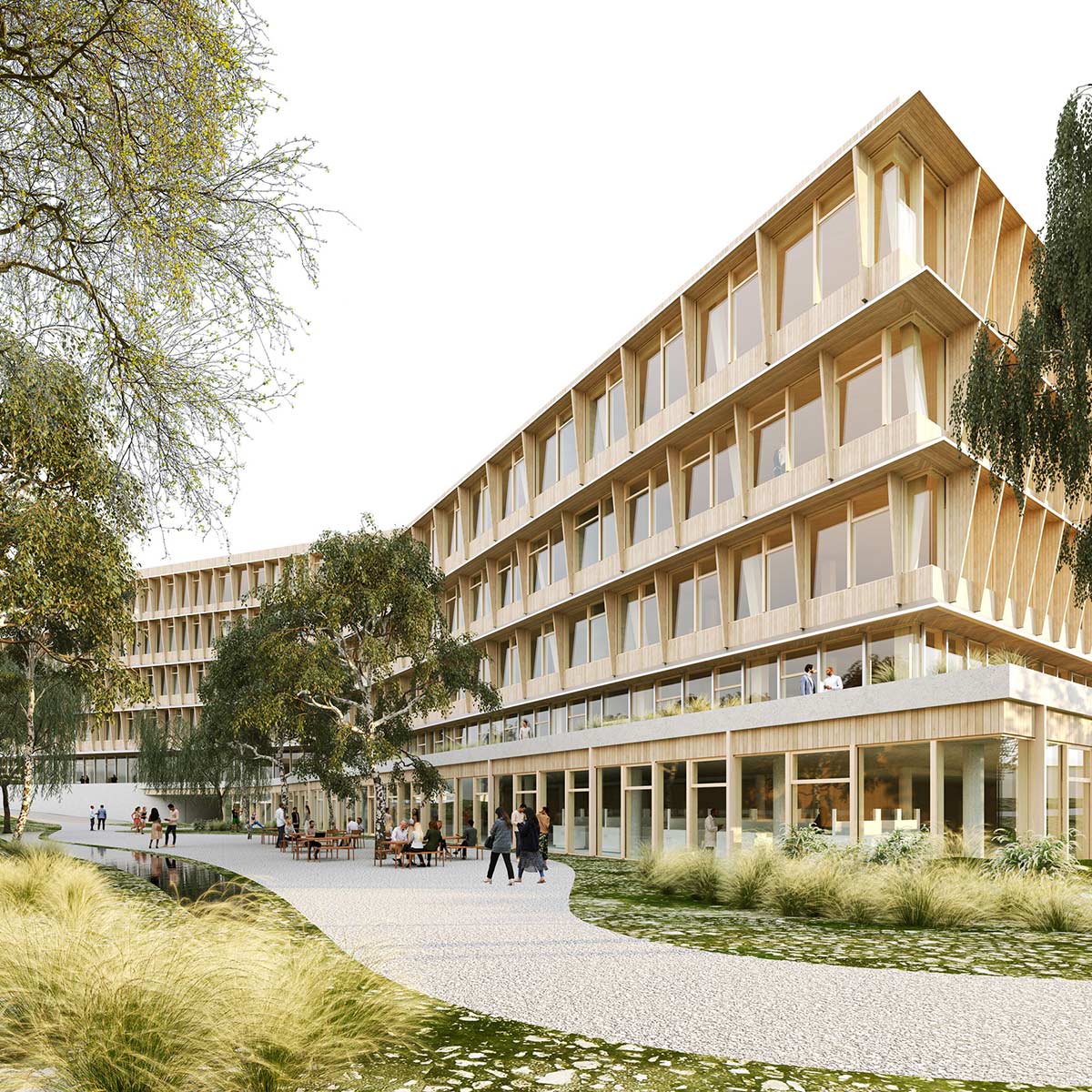
Ecotope Campus, timber construction, master plan, 3XN, EPFL, Lausanne, Switzerland
The master plan envisages the use of construction materials that are either recycled or recyclable.
Ecotope Campus, timber construction, master plan, 3XN, EPFL, Lausanne, Switzerland
A room height of 4.5 metres aims to maintain maximum adaptability.

Circular and adaptable

Besides a focus on serendipity and biophilia, the future viability of this site is maintained by other design principles as well: circularity and sustainability. Bolt or screw connections are easily accessed and enable deconstruction of the individual units. Temporary walls and sliding doors are designed to guarantee the building’s future adaptability.

The aim is to create resilient architecture that fits both current and future needs.

3XN, architects

As regards the choice of materials, the master plan envisages use of recycled and recyclable materials. For the most part, the structure and facade of the buildings will be made of timber. A floor-to-ceiling height of 4.5 metres was chosen to allow maximum adaptability. “The aim is to create resilient architecture that fits both current and future needs,” the architects say.
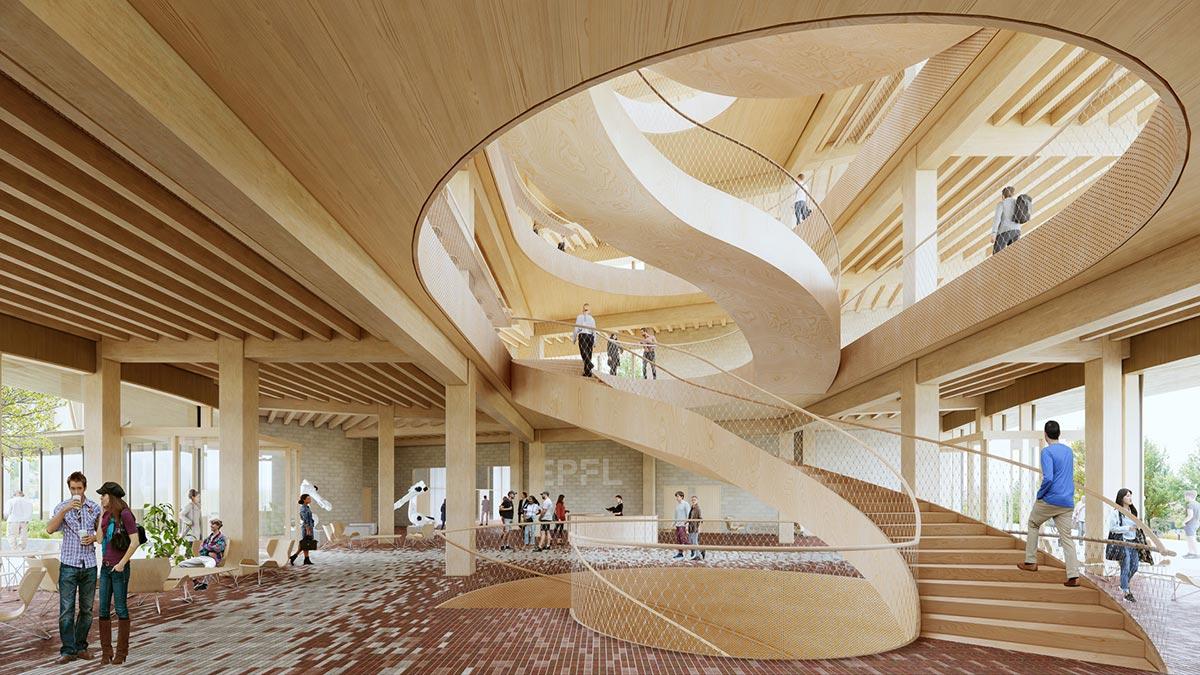
Staircase, Ecotope Campus, timber construction, master plan, 3XN, EPFL, Lausanne, Switzerland
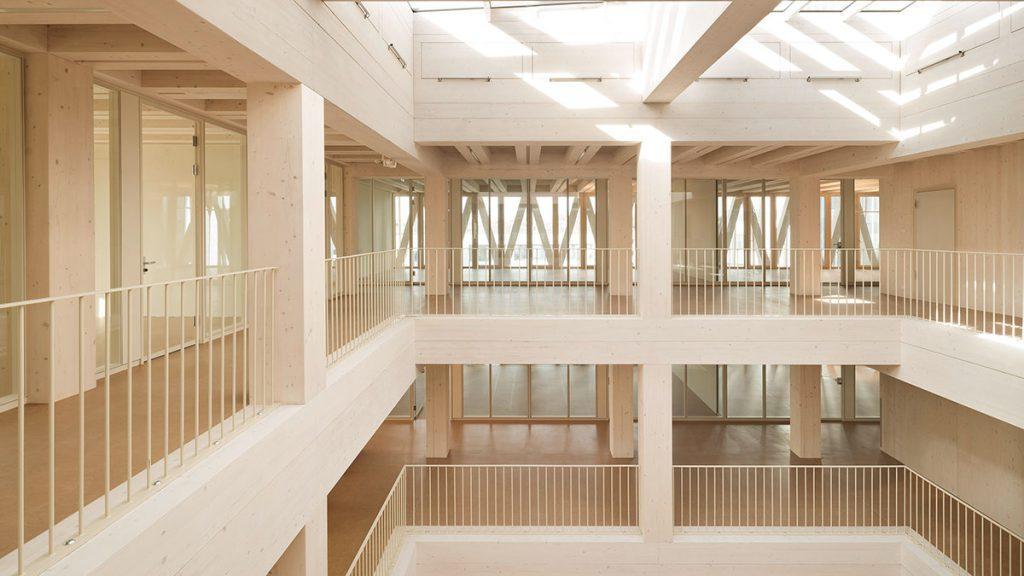
Outside and inside the building, timber dominates as a climate-friendly construction material.

Grätzel cell generates power

Nowadays, it goes without saying that the building will use minimum energy while producing as much of its own energy requirements as possible. A compact building volume, photovoltaic panels, natural ventilation and evaporative cooling will play a part in this.

An invention by one of the institute’s researchers could also help the building achieve the greatest possible degree of independence for its energy needs: the “Grätzel cell” is a bionics application that converts light energy into electrical energy.
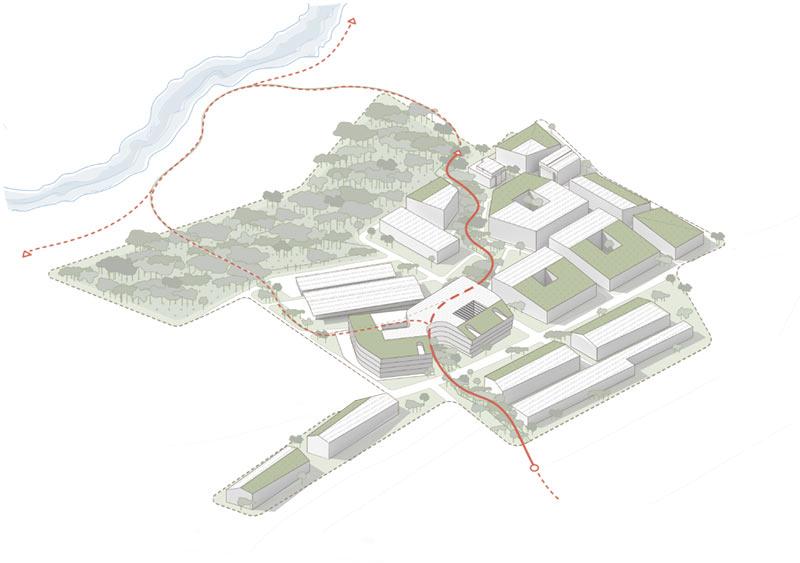
Ecotope Campus, timber construction, master plan, 3XN, EPFL, Lausanne, Switzerland
The grounds are connected via a green main pathway that is designed to bring people together.

Unlike with conventional solar cells, this enables transparent coloured panels to create an active facade. It was invented by Michael Grätzel, a Swiss chemist and professor at EPFL.

Grätzel has won numerous science awards for his discovery. And Ecotope is now expected to keep this research institute at the cutting edge with its architecture as well.

Text: Gertraud Gerst
Translation: Rosemary Bridger-Lippe
Visualizations: 3XN
Other articles
that might interest you

A church that stores carbon
#architecture
A church that stores carbon

As the first church to be built in Copenhagen for 30 years, it may well become an icon. Ørestad Church is a sculptural timber construction designed by Henning Larsen. A kind of “Church 2.0”, it is also a modern community centre that reaches out to everybody regardless of their belief.

A temple for start-ups
#greenbuilding
A temple for start-ups

The German city of Heilbronn is home to a remarkable timber structure. Innovation Factory 2.0 displays a new kind of aesthetics, both on the inside and outside. This sophisticated paradise for innovation displays precision craftsmanship from Switzerland.

University breaks timber construction record
#greenbuilding
University breaks timber construction record

Perth is home to the largest mass-engineered timber building in the southern hemisphere: the university complex named Boola Katitjin. Designed by local firm Lyons Architects with a length of 180 metres, the building used prefabricated elements sourced from Europe.

Why wood is so good for us
#greenbuilding
Why wood is so good for us

Wood doesn’t just improve creativity and performance, it also boosts the immune system and reduces stress. The research project HOMERA based at the Technical University of Munich has supplied extensive scientific evidence here.

A circus chooses timber construction
#greenbuilding
A circus chooses timber construction

The new winter quarters for Circus Knie leave no doubt that a storehouse can be an attractive piece of architecture. Whereas the existing building had to be demolished after 60 years, the new timber design is expected to last much longer.

Sustainability with wind and wood
#greenbuilding
Sustainability with wind and wood

Using a thermal activation system in connection with structural timber design works very well with rammed earth as well, as shown by the extension to the headquarters of Windkraft Simonsfeld in Lower Austria. This new build had a positive carbon footprint even during the construction phase.

A fire station built with wood
#greenbuilding
A fire station built with wood

It is a common fear that timber buildings add fuel to the fire. A town near Hamburg has a compelling response to this concern: Reinbek Fire Services have used wood for the construction of their fire station.

A lighthouse for Malmö
#greenbuilding
A lighthouse for Malmö

The city of Malmö in southern Sweden is home to the country’s tallest office building constructed entirely of timber. Named Fyrtornet, the project was designed by Swedish architects with materials and know-how from Tyrol, Austria.

Pioneering residential timber high-rise in Paris
#greenbuilding
Pioneering residential timber high-rise in Paris

A high-rise block resembling stacked wooden shelves has caused a stir in the French capital. Named Wood Up, this timber structure is reducing CO2 emissions by 80 percent compared to a conventional design, according to architects LAN.

Quadrature of the circle
#architecture
Quadrature of the circle

The Prepared Rehmannia Root Crafts Exhibition Hall celebrates an important medicinal herb used in Traditional Chinese Medicine. Luo Studio has created a shrewd design for a dome based on cost-efficient construction using standardized structural timber.

Industrial construction protects the climate
#greenbuilding
Industrial construction protects the climate

The sober practicality of metal constructions for industrial use is no longer inevitable. A different approach with rammed earth and timber for the new Weleda logistics centre has sent sustainability standards rocketing sky-high.

A natural construction kit
#greenbuilding
A natural construction kit

Office building HasleTre in Oslo was awarded the title of Norway’s “Timber Building of the Year” for good reason. With a visionary concept by Oslotre, it can be dismantled like a box of toy building bricks and is made predominantly of nature-based materials.

Timber restores industrial ruin
#greenbuilding
Timber restores industrial ruin

High-profile oat milk producer Oatly chose a dilapidated yet prominent building for its new head office: in the port of Malmö, the former foundry Gjuteriet has been transformed. The sustainable design uses plenty of wood and repurposed construction materials from the dismantled shipyard warehouses nearby.

A landmark in the Pyrenees
#greenbuilding
A landmark in the Pyrenees

Sophisticated architecture is no longer a rarity in high mountain regions. Refuge de Barroude is a mountain hut designed for the Pyrenees by architects Snøhetta, setting new standards for high-altitude construction.

A town revives its past
#architecture
A town revives its past

Preservation of the round kiln in Zell has transformed an industrial monument and breathed new life into it. The extension to the original building is a marriage of bricks, wood and red concrete – just one of the lifelong bonds that are formed here.

Series production for timber offices
#greenbuilding
Series production for timber offices

ZERO. is a new modular office building in Stuttgart which uses serially manufactured wooden elements and building technology that exploits passive physical effects. This multi-tenant investor project takes a fresh approach in its sharing of spaces and services.

A sector on the upswing
#greenbuilding
A sector on the upswing

It is no secret that the construction sector is one of the largest emitters of greenhouse gases. With carbon pricing still in its infancy, entrepreneurs in the industry are actively pursuing how to achieve decarbonization.

Building bridges at home
#living
Building bridges at home

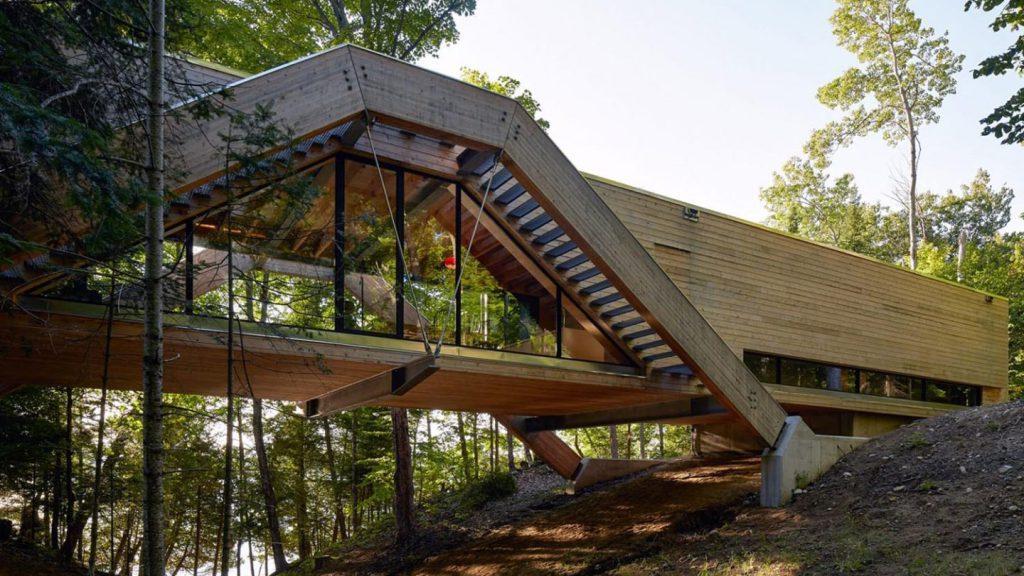
Five metres above the ground, a private residence straddles a channel that runs through woodland. It seems more like a suspension bridge in its approach, and this house indeed has a very similar design. Called the Bridge House, this structure by architectural studio LLAMA definitely lives up to its name.

A modern-day nod towards heaven
#architecture
A modern-day nod towards heaven

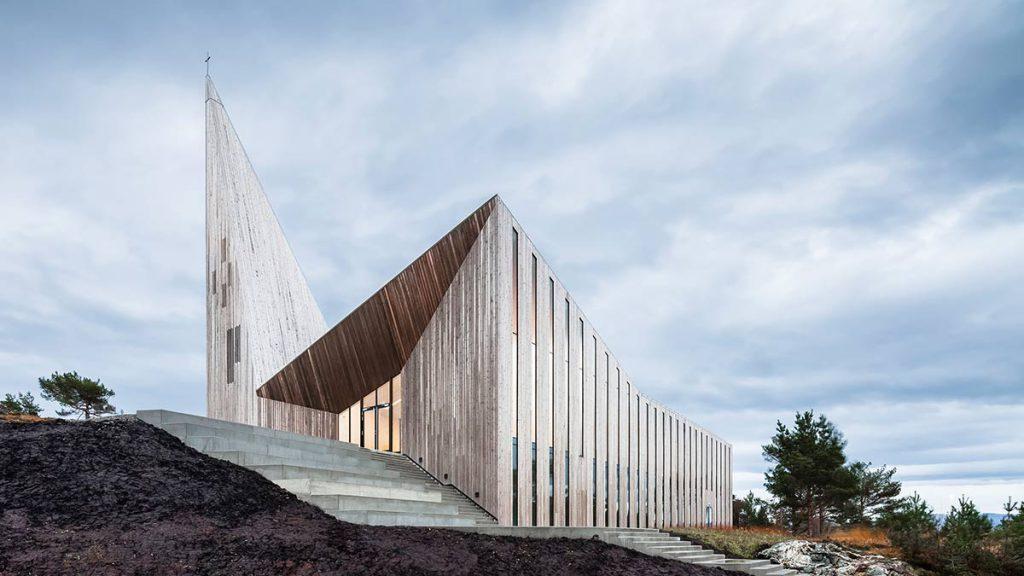
Knarvik Church is a contemporary interpretation of the 1000-year-old stave churches in Norway. This award-winning sacred building designed by Reiulf Ramstad Arkitekter has become a tourist attraction – and also a place that is open to all.

United by the Grand Ring
#greenbuilding
United by the Grand Ring

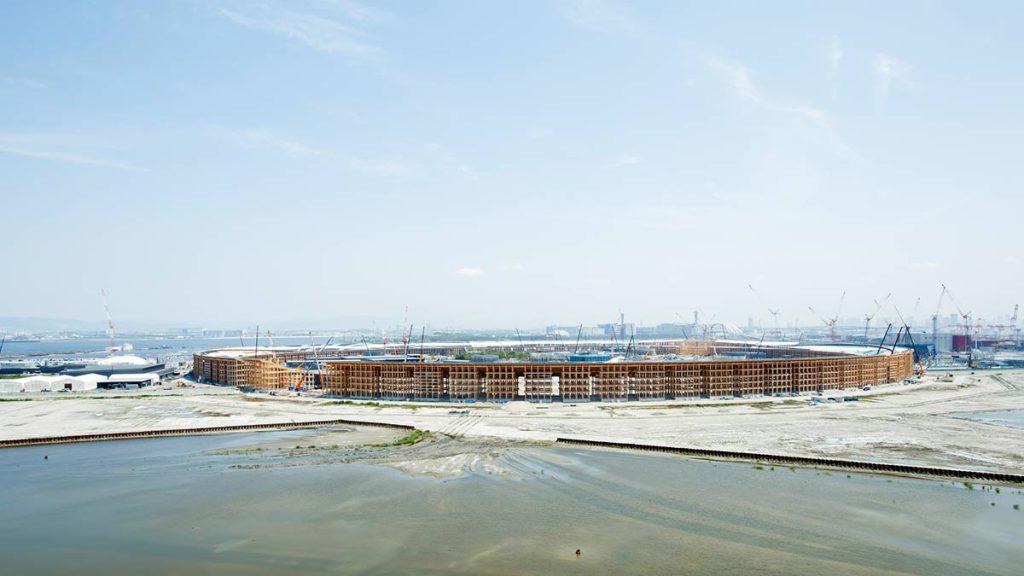
Expo 2025 in Osaka is welcoming its visitors with a structure that is in a class of its own. Architect Sou Fujimoto has designed the Grand Ring for the World Exposition. It is the world’s largest wooden architectural construction, made with glued laminated timber.

Flax and timber as hybrid pioneers
#greenbuilding
Flax and timber as hybrid pioneers

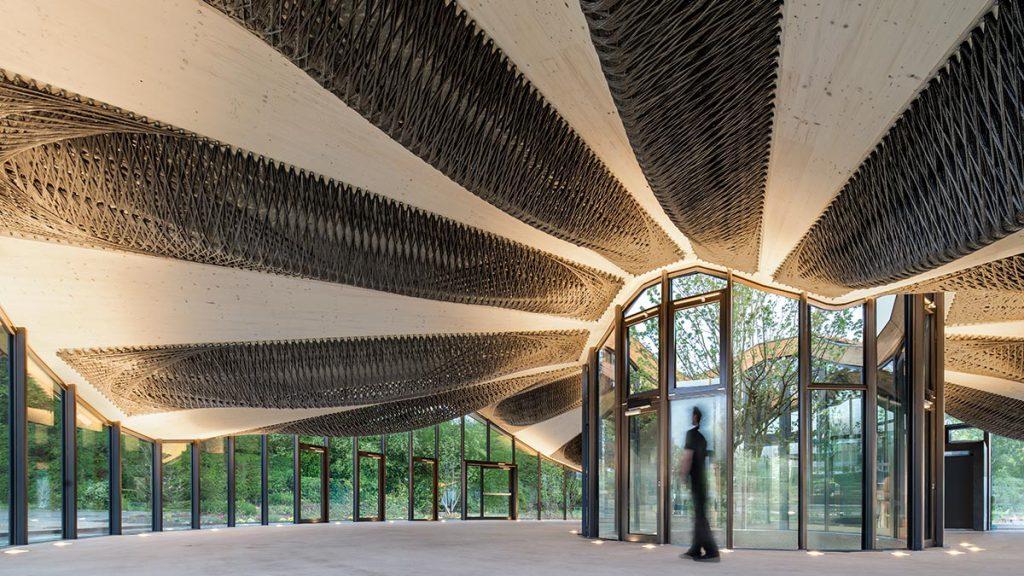
Two architectural innovations made their debut on the world stage at the Landesgartenschau in southern Germany’s Allgäu region: the self-shaping Wangen Tower made of wood and the Hybrid Flax Pavilion with robotically produced flax sections that reduced the quantity of wood needed for the structure by two thirds.

In Albert Einstein’s footsteps
#greenbuilding
In Albert Einstein’s footsteps

The European Organization for Nuclear Research examines the structure of matter. Its latest construction is already underway: named CERN B777 and designed by Henning Larsen, the new research centre will be round and mostly made of wood.

Free-floating and functional
#greenbuilding
Free-floating and functional

The TUM Campus at Munich’s Olympiapark shows how a carefully planned timber project can save resources and the associated costs. Shortlisted for the DAM Preis 2024, it was formerly Europe’s largest timber construction.

McDonald’s builds with timber
#greenbuilding
McDonald’s builds with timber

São Paulo is home to Brazil’s “most sustainable McDonald’s”. It has a timber design and is presented as an educational project for sustainable building. For the company, the wooden structure is a “recipe for the future”.

Timber as a technology showcase
#greenbuilding
Timber as a technology showcase

A new entrance building has been designed for the Deutsches Technikmuseum in Berlin. With its striking lattice roof, the design by Austrian architectural firm Innauer Matt demonstrates that modern timber construction is a byword for progress through sustainability.

Where sheep graze on an urban ‘hillside’
#greenbuilding
Where sheep graze on an urban ‘hillside’

The new Raiffeisen Landesbank Kärnten building is a transparent timber construction with room for sheep on its roof. In this interview, querkraft architect Jakob Dunkl talks about the design and also the connection between sustainability and love.

University enters the green building revolution
#greenbuilding
University enters the green building revolution

The Marga Klompé Building at Tilburg University is the first academic building in the Netherlands to be built out of wood. Insulation made from recycled denim jeans is part of the circular design by Powerhouse Company.

On track for transformation
#greenbuilding
On track for transformation

Industrial wastelands need new strategies to present workable options for re-use. The architects at Smartvoll are experts in this kind of development. One of their designs is an ecosystem for the former railway depot in Amstetten, Lower Austria, as living space for plants, animals and people.

When the school bell rings
#architecture
When the school bell rings

Its roof looks like three pyramids atop a space of celebratory grandeur, a wooden construction reminiscent of timber-framed buildings. This is precisely what the architects at Maccreanor Lavington had in mind for the new dining hall at Ibstock Place School.

More timber construction for Munich
#greenbuilding
More timber construction for Munich

Following completion of Germany’s largest timber housing development in Munich, the city’s first timber hybrid office complexes are now being built. Developed by Accumulata, these projects will offer sustainable workplaces for the future and also construction materials that remain in the loop.

Schliessen
Letting

Do you want to find out more about space at Timber Factory and the benefits for your company?

We look forward to hearing from you!

This site is registered on wpml.org as a development site. Switch to a production site key to remove this banner.